Aron (Dereczynski) Derman
Nació: 1922, en Slonim, Polonia
Describe los eventos que ocurrieron durante la invasión alemana de Slonim, Polonia [Entrevista: 1994]
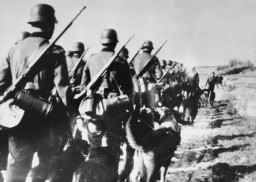
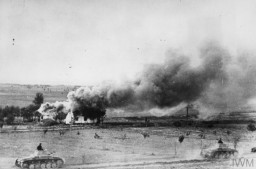
Later, around nine, nine, ten o'clock, we were ready to go to sleep. And it didn't take too long--before I even had a chance to fall asleep--we hear like crackles on the roof. We hear...first thing, we hear shooting, shooting in our yard. I lived in that small courtyard. And it's shooting going on, and one after the other, and it's getting stronger, the shots are getting more, more often. And here I hear crackles on the roof. So I was thinking, "Thank God, it's raining." But it wasn't rain. The house was on fire. It was a wooden house, and it caught, the...it caught, the house caught on fire. So we were forced to get out...now that's about one or two o'clock in the midnight, and it was...only thing you could see is from the moon, moonlight. It was...you could see everything what's happening. So some way we ducked out from the house and we are in the yard, and here in the middle of the fight is going on between the Germans and the Russians. What happened is, a group of Russians, well they were left over. The front was already far, far away, but they didn't know, the Russians didn't know there's no more front in here and some way a fight was going on. So we are coming out in the middle of the night and we are immediately arrested by the Germans. And, uh, they put us in one place, and we were approximately, I would say, about 15 or 18 men, and women, so they made women, they pushed them aside, but men they took and they made everybody, if anybody had a cap on, they made everybody to take off their caps. And anybody who did not have hair, they put them in one place and they shoot them. They shoot them in our back yard. So here, I'm a young fellow, lost my home, I've lost my home, and I'm witnessing a terrible massacre of maybe eight or ten men. By luck, they didn't take me because I had hair, I wasn't in the army. The reason they looked for bald hair is they thought maybe it's Russians, [who had] changed their clothes. So they, they took the people...and my father didn't have much hair, but he was probably looked older, so by chance they didn't take him either. But I know the reason why they didn't take me. So they killed them, and we had to dig a big, uh, graveyard, a big hole, in our yard. And we buried, uh, the people there.
Aron nació en una familia judía de clase media de Slonim, que durante la entreguerra pertenecía a Polonia. Sus padres tenían un negocio de ropa. Después de terminar sus estudios en una escuela técnica, Aron trabajó de operador de cine en un pueblo cerca de Slonim. El ejército soviético tomo control de Slonim en septiembre de 1939. La guerra estalló entre Alemania y la Unión Soviética en junio de 1941. Aron volvió a Slonim. Los alemanes pronto ocuparon Slonim, y luego internaron a los judíos en un ghetto. Aron fue forzado a trabajar en una fabrica de armamentos, y pudo entrar armas al ghetto de contrabando. Después de ayudar su familia a escapar cuando los alemanes destrozaron el ghetto, Aron trabajó en Grodno hasta que fue arrestado. Durante la deportación de Grodno, Aron saltó del tren. Eventualmente pudo escaparse de Grodno y juntarse con la resistencia fuera de Vilna. Después de la guerra, él y su esposa (que había conocido en el ghetto de Slonim) emigraron a los Estados Unidos y se asentaron en Chicago.
US Holocaust Memorial Museum - Collections