United States Holocaust Memorial Museum The Power of Truth: 20 Years
Museum   Education   Research   History   Remembrance   Genocide   Support   Connect
Donate
Holocaust Encyclopedia


Jehovah's Witnesses — Photograph

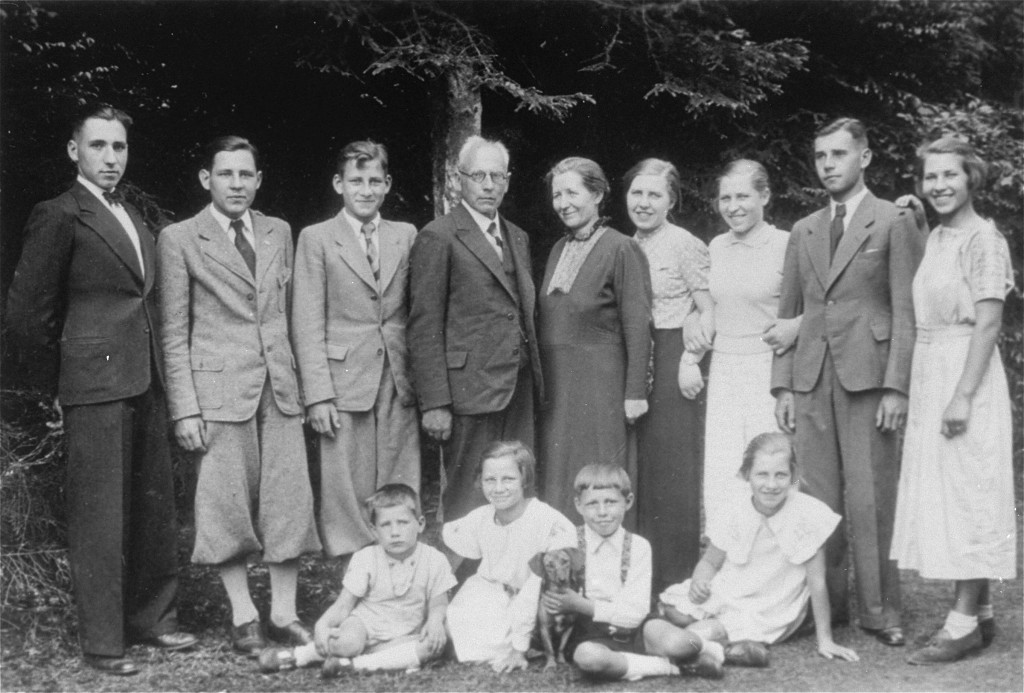
The Kusserow family was active in their region distributing religious literature and teaching Bible study classes in their home. Their house was conveniently situated for fellow Witnesses along the tram route connecting the cities of Paderborn and Detmold. For the first three years after the Nazis came to power, the Kusserows endured moderate persecution by local Gestapo agents, who often came to search their home for religious materials. In 1936, Nazi police pressure increased dramatically, eventually resulting in the arrest of the family and its members' internment in various concentration camps. Most of the family remained incarcerated until the end of the war. Bad Lippspringe, Germany, ca. 1935.

The Kusserow family was active in their region distributing religious literature and teaching Bible study classes in their home. Their house was conveniently situated for fellow Witnesses along the tram route connecting the cities of Paderborn and Detmold. For the first three years after the Nazis came to power, the Kusserows endured moderate persecution by local Gestapo agents, who often came to search their home for religious materials. In 1936, Nazi police pressure increased dramatically, eventually resulting in the arrest of the family and its members' internment in various concentration camps. Most of the family remained incarcerated until the end of the war. Bad Lippspringe, Germany, ca. 1935.

— USHMM, courtesy of Waltraud & Annemarie Kusserow


Related Holocaust Encyclopedia Articles:

Jehovah's Witnesses »
Jehovah's Witnesses: Persecution 1870–1936 »


Copyright © United States Holocaust Memorial Museum, Washington, DC