
We would like to thank Crown Family Philanthropies and the Abe and Ida Cooper Foundation for supporting the ongoing work to create content and resources for the Holocaust Encyclopedia. View the list of all donors.
![Chief Prosecutor Benjamin Ferencz presents evidence during the Einsatzgruppen Trial. [LCID: 09918]](https://encyclopedia.ushmm.org/images/thumb/b8542ad8-3e73-4b7c-a368-2dcbc971fa85.jpg)
Featured Article
How Many People did the Nazis Murder?
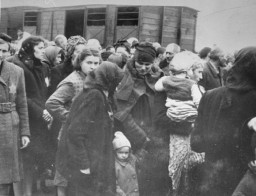
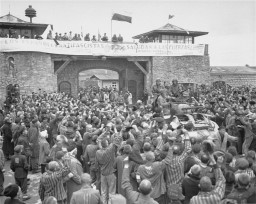
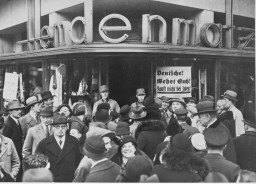
Nazi Germany committed mass murder on an unprecedented scale. The Nazis and their allies and collaborators killed six million Jewish people. This systematic, state-sponsored genocide is now known as the Holocaust. The Nazis and their allies and collaborators also committed other mass atrocities. They persecuted and killed millions of non-Jewish people during World War II.
![German soldiers direct artillery against a pocket of resistance during the Warsaw ghetto uprising. [LCID: 34083b]](https://encyclopedia.ushmm.org/images/thumb/8ffe37b4-0b4f-4966-9e03-838766fb9e89.jpg)
![SS troops advance during the invasion of Greece. The invasion of the Balkans began in April 1941. [LCID: 20390]](https://encyclopedia.ushmm.org/images/thumb/32fa216d-f273-4760-9c01-099e4c03dcd1.jpg)
![Jews from Macedonia who were rounded up and assembled in the Tobacco Monopoly transit camp before deportation to the Treblinka killing ... [LCID: 79737]](https://encyclopedia.ushmm.org/images/thumb/f2c4528d-d346-46d8-a20c-1cde912c2078.jpg)
![Illustration from an antisemitic children's primer. [LCID: 10640c]](https://encyclopedia.ushmm.org/images/thumb/4c6348d1-d3e6-4be3-aae5-b12761f4f20a.jpg)
Explore the Encyclopedia
ID Cards
Learn more about personal experiences during the Holocaust
Timeline of Events
Explore a timeline of events that occurred before, during, and after the Holocaust.
Discussion Questions
How and why was the Holocaust possible?