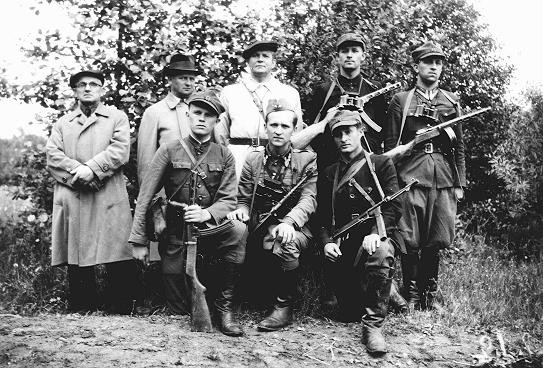
Partisan Groups in the Parczew Forests
A Project of the Miles Lerman Center
An estimated 20,000 to 30,000 Jews fought in partisan groups based in the forests of eastern Europe. In Poland, Jews were generally excluded from partisan groups because of antisemitic and anti-Communist attitudes. While Soviet partisan units were sometimes receptive to Jewish fighters, the formation of a stronger Soviet and Polish resistance in 1943 was too late for the vast majority of Jews in eastern Europe killed in mass shootings and gassings.
The Jewish partisan movement in Poland began to take shape in the summer of 1942 as a time of increased deportations to the death camps of Treblinka, Sobibor, Auschwitz, and Belzec. A few Jews managed to escape to the forest before and during deportations and the immediate hunts organized by the police prompted the establishment of armed groups to fight the hunts and to secure conditions for refugees living in the forests. Unlike the Poles who organized resistance groups, Jewish groups were hastily organized after arrival in the forests, had little or no military experience, could count on almost no assistance from the surrounding population, and often took on the additional burden of caring for unarmed refugees.
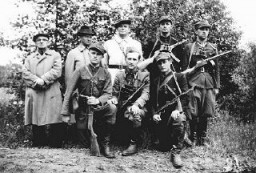
Still, in some areas, Jewish partisan group did manage to function and have some success. The area including Parczew and Wlodawa counties near Lublin in the General Government became one of the primary battlefields of the Jewish partisan movement. An area of forests and lakes, with few passable roads, the Parczew forest was an ideal location for partisan activity. Notable partisan leaders included Ephraim (Frank) Bleichman and Shmuel (Mieczslaw) Gruber. Gruber became the second-in-command to Yechiel Greenshpan who led Jewish forces in the Parczew forest, and Bleichman was one of Greenshpan’s two platoon commanders.
The group fought along with the People’s Guard in a number of intense engagements against German forces, making use of machine guns, explosives for mining railways, and food and other supplies air-dropped by Soviet forces. They participated in the takeover of the city of Parczew on April 16, 1944.
Series: Resistance in the Smaller Ghettos of Eastern Europe
Critical Thinking Questions
- What obstacles and limitations did Jews face when considering resistance?
- What pressures and motivations may have influenced the partisans' decisions and actions?
- How can societies, communities, and individuals reinforce and strengthen the willingness to stand up for others?