Genocide Timeline
This timeline notes the major conceptual and legal advances in the development of "genocide." It does not attempt to detail all cases which might be considered as genocides. Rather, the timeline focuses on how the term has become a part of the political, legal, and ethical vocabulary of responding to widespread threats of violence against groups.
1900: Raphael Lemkin
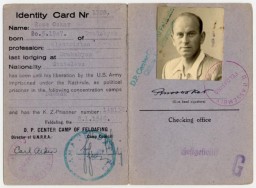
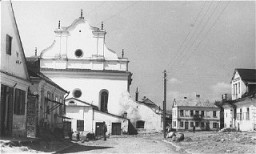
Raphael Lemkin, who would later coin the word genocide, was born into a Polish Jewish family in 1900. His memoirs detail early exposure to the history of Ottoman attacks against Armenians (which most scholars believe constitute genocide), antisemitic pogroms, and other histories of group-targeted violence as key to forming his beliefs about the need for legal protection of groups.
1933: Rise of Adolf Hitler
With the appointment of Adolf Hitler as Chancellor on January 30, 1933, the Nazi Party took control of Germany. In October, German delegates walked out of disarmament talks in Geneva and Nazi Germany withdrew from the League of Nations. In October, at an international legal conference in Madrid, Raphael Lemkin (who later coined the word genocide) proposed legal measures to protect groups. His proposal did not receive support.
1939: World War II
World War II began on September 1, 1939. Germany invaded Poland, triggering a treaty-mandated Anglo-French declaration of war on Germany. On September 17, 1939, the Soviet army occupied the eastern half of Poland. Lemkin fled Poland, escaping across the Soviet Union and eventually arriving in the United States.
1941: A Crime Without a Name
On June 22, 1941, Nazi Germany invaded the Soviet Union. As the German forces advanced further east, SS, police, and military personnel carried out mass shootings of Jewish men, women, and children, as well as other perceived enemies. The British became aware of these atrocities through intercepted radio communications. They moved British Prime Minister Winston Churchill to state in August 1941: “We are in the presence of a crime without a name.”
1944: Genocide Coined
Nazi leadership embarked on a variety of population policies aimed at restructuring the ethnic composition of Europe by force, using mass murder as a tool. Included among these policies and involving mass murder were the attempt to murder all European Jews, which we now refer to as the Holocaust; the attempt to murder most of the Roma (Gypsy) population of Europe; and the attempt to physically liquidate the leadership classes of Poland and the former Soviet Union. Also included in these policies were numerous smaller scale resettlement policies involving the use of brutal force and murder that we now refer to as a form of ethnic cleansing. In 1944, Raphael Lemkin, who had moved to Washington, DC, and worked with the US War Department, coined the word genocide in his text Axis Rule in Occupied Europe. This text documented patterns of destruction and occupation throughout Nazi-held territories.
1945–1946: International Military Tribunal
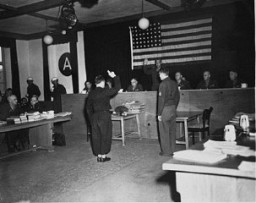
Between November 20, 1945, and October 1, 1946, the International Military Tribunal in Nuremberg tried 22 major Nazi German leaders on charges of crimes against peace, war crimes, crimes against humanity, and conspiracy to commit each of these crimes. It was the first time that international tribunals were used as a post-war mechanism for bringing national leaders to justice. The word genocide was included in the indictment, but as a descriptive term, not as a legal term.
1947–1948: Creating an International Convention on Genocide
Raphael Lemkin was a critical force for bringing genocide before the nascent United Nations (UN), where delegates from around the world debated the terms of an international law on genocide. On December 9, 1948, the final text of the United Nations Convention on the Prevention and Punishment of Genocide was adopted unanimously. It entered into force on January 12, 1951, after more than 20 countries from around the world ratified it.
1950–1987: Cold War
Massive crimes against civilian populations were all too common in the years after World War II and throughout the Cold War. Whether these situations constituted genocide was scarcely considered by the countries that had undertaken to prevent and punish that crime by joining the Genocide Convention.
1988: The United States Signs the Genocide Convention
On November 4, 1988, US President Ronald Reagan signed the UN Convention on the Prevention and Punishment of Genocide. The Convention had strong supporters, but also faced ardent opponents, who argued it would infringe on US national sovereignty. One of the Convention’s strongest advocates, Senator William Proxmire from Wisconsin, delivered more than 3,000 speeches advocating the Convention in Congress from 1968–1987.
1991–1995: Wars of the Former Yugoslavia
The wars of the former Yugoslavia were marked by massive war crimes and crimes against humanity. The conflict in Bosnia (1992–1995) brought some of the harshest fighting and worst massacres to Europe since World War II. In one small town, Srebrenica, as many as 8,000 Bosniak men and boys were murdered by Serbian forces.
1993: Resolution 827
In response to the atrocities occurring in Bosnia, the United Nations Security Council issued resolution 827, establishing the International Criminal Tribunal for the former Yugoslavia (ICTY) in The Hague. It was the first international criminal tribunal since Nuremberg. Crimes the ICTY could prosecute and try were: grave breaches of the 1949 Geneva Conventions, violations of the laws or customs of war, genocide, and crimes against humanity. Its jurisdiction was limited to crimes committed on the territory of the former Yugoslavia.
1994: Genocide in Rwanda
From April until mid-July, between 500,000 and one million Rwandans, predominantly Tutsis, were killed in Rwanda. It was killing on a devastating scale and scope, and at a devastating speed. In October, the UN Security Council extended the mandate of the ICTY to include a separate but linked tribunal for Rwanda, the International Criminal Tribunal for Rwanda (ICTR), located in Arusha, Tanzania.
1998: First Conviction for Genocide
On September 2, 1998, the ICTR issued the world’s first conviction for genocide in an international tribunal when Jean-Paul Akayesu was judged guilty of genocide and crimes against humanity for acts he engaged in and oversaw as mayor of the Rwandan town of Taba.
Through an international treaty ratified on July 17, 1998, the International Criminal Court (ICC) was permanently established to prosecute genocide, crimes against humanity, and war crimes. The treaty reconfirmed the definition of genocide found in the 1948 Convention on the Prevention and Punishment of the Crime of Genocide. It also expanded the definition of crimes against humanity and prohibits these crimes during times of war or peace.
While the ICTY and ICTR, other ad hoc tribunals, and the ICC have helped establish legal precedents and can investigate crimes within their jurisdictions, punishment of genocide remains a difficult task. Even more difficult is the continuing challenge to prevent genocide.
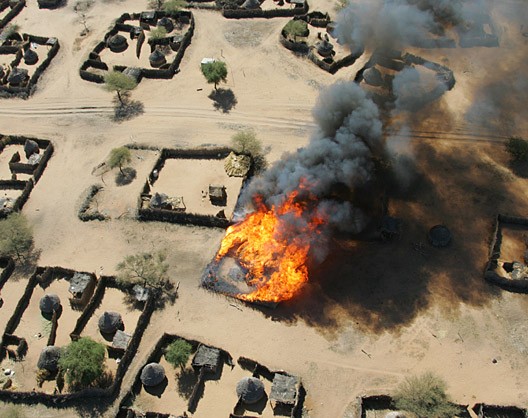
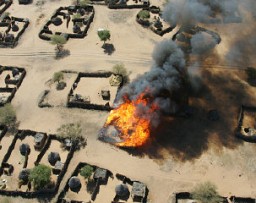
2004: Genocide in Darfur
For the first time in US government history, an ongoing crisis was referred to as a genocide. On September 9, 2004, Secretary of State Colin Powell testified before the Senate Foreign Relations Committee. He stated:
"We concluded—I concluded—that genocide has been committed in Darfur and that the Government of Sudan and the Janjaweed bear responsibility—and that genocide may still be occurring."
March 17, 2016: Genocide in Iraq and Syria
Secretary of State John Kerry announced that the self-proclaimed Islamic State (IS) had committed genocide against Yezidi, Christian, and Shia Muslim populations in areas under its control across Syria and Iraq. This was only the second time that the US Government made a finding of genocide. Secretary Kerry also stated that IS committed "crimes against humanity and ethnic cleansing directed at these same groups and in some cases also against Sunni Muslims, Kurds, and other minorities."
Critical Thinking Questions
- What is the difference between genocide and mass atrocity?
- Why is it important that a new word had to be coined?
- How has the international community responded to genocide since the Holocaust?