Ernest Hemingway
In 1933, Nazi students at more than 30 German universities pillaged libraries in search of books they considered to be "un-German." Among the literary and political writings they threw into the flames were the works of Ernest Hemingway.
Excerpt
The first panacea for a mismanaged nation is inflation of the currency; the second is war. Both bring a temporary prosperity; both bring a permanent ruin. But both are the refuge of political and economic opportunists.
—"Notes on the Next War," Esquire magazine, Ernest Hemingway, September 1935
Which of Ernest Hemingway's Works were Burned?
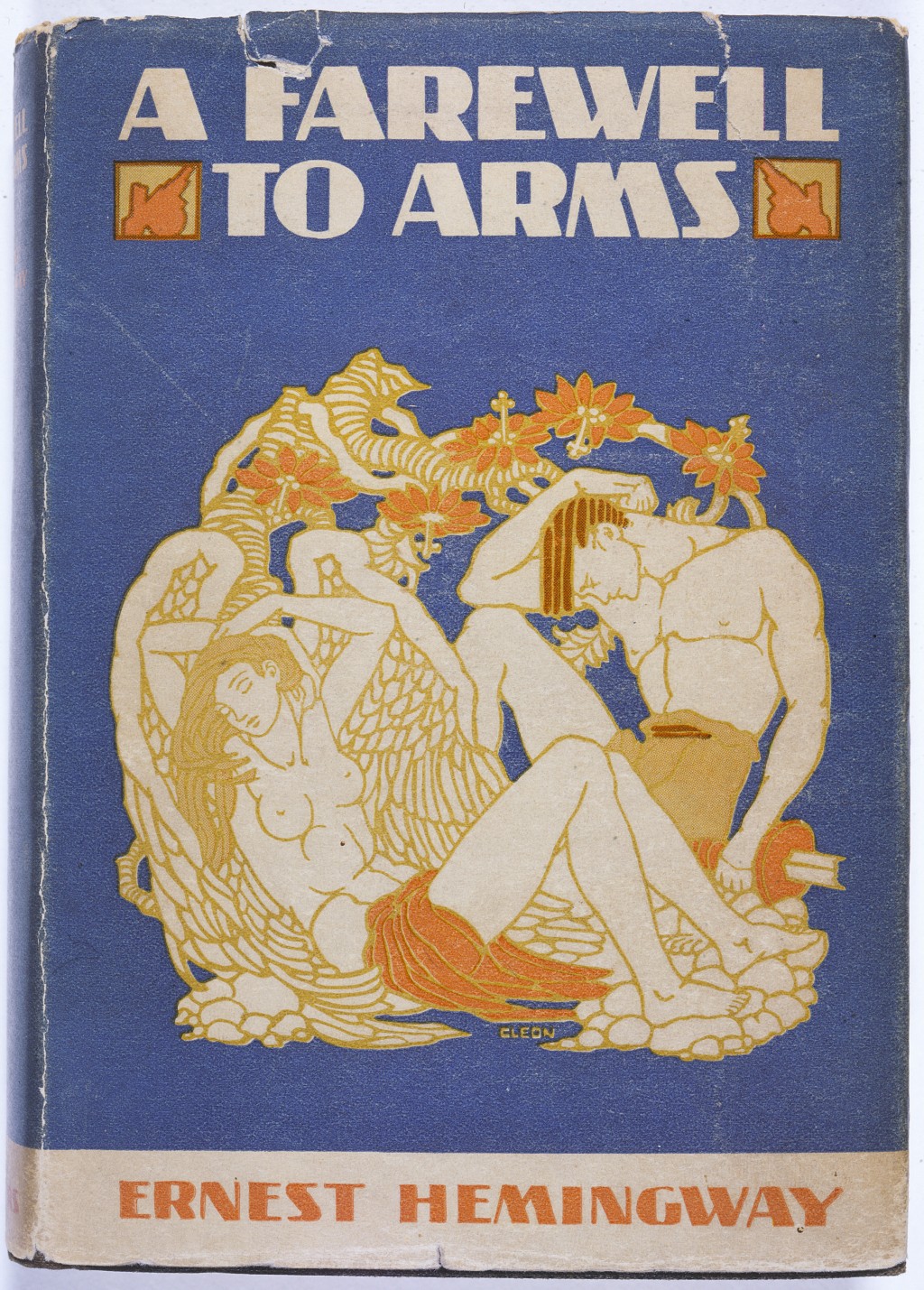
A Farewell to Arms (In einem anderen Land)
Who was Ernest Hemingway?
Legendary American novelist Ernest Hemingway (1899–1961) was born in Oak Park, Illinois. In May 1918, he volunteered to serve in the Red Cross Ambulance Corps in World War I. Wounded while serving on the Italian front, he would later condemn the savagery of war again and again in his fiction.
By 1926, Ernest Hemingway had completed his first critically acclaimed work, The Sun Also Rises. In 1929, he published A Farewell to Arms (translated into German as In einem anderen Land); a total negation of warfare—including a heroine who dies in childbirth after a wartime romance. The Nazis, who glorified wartime struggle, burned the work in 1933.
Critical Thinking Questions
- If Jews were the principal target during the Holocaust, why were books written by non-Jewish authors burned?
- How did the German public react to the book burnings? What was reaction like outside of Germany?
- Why do oppressive regimes promote or support censorship and book burning? Why might this be a warning sign for mass atrocity?