German Resistance to Hitler
The government of Adolf Hitler was popular with most Germans. Although the Gestapo (secret state police) and the Security Service (SD) suppressed open criticism of the regime, there was some German opposition to the Nazi state and the regimentation of society that took place through the process of "coordination" (Gleichschaltung)—the alignment of individuals and institutions with Nazi goals.
Opposition ranged from non-compliance with Nazi regulations to attempts to assassinate Hitler. Among the earliest resistance to the regime was the political opposition organized by leftist parties such as the Social Democratic Party and the Communist Party of Germany. However leftist opposition within Germany proved ineffectual, as the Security Police (Sipo) crushed the leftist political organizations by force.
Efforts to "coordinate" religious life also followed the Nazi rise to power. Although the Concordat between the Vatican and the Third Reich in July 1933 regulated relations between the Reich and the Catholic church, the Nazis went on to suppress Catholic groups and sought to defame the church through a series of show trials known as the priest trials. While officially silent about the persecution of Jews, the church played a role in the opposition to the killing of mentally or physically handicapped individuals ("euthanasia"). Moreover, individual clergymen sought to protect or help Jews.
Opposition to the Nazi regime also arose among a very small number of German youth, some of whom resented mandatory membership in the Hitler Youth. In Munich in 1942, university students formed the White Rose resistance group. Its leaders, Hans Scholl, his sister Sophie Scholl, and professor Kurt Huber were arrested and executed in 1943 for the distribution of anti-Nazi leaflets.
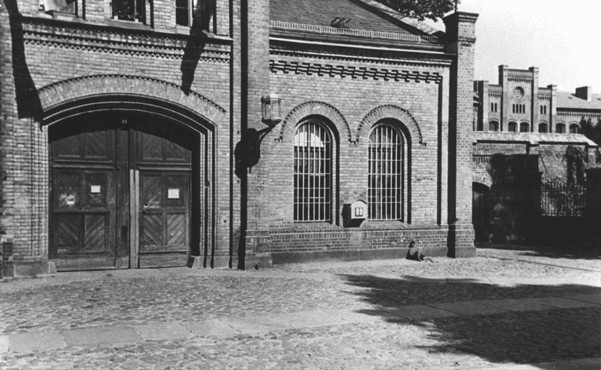
A group that included conservative military officers and diplomats believed that Hitler's violent death should signal a general anti-Nazi revolt. Military officers attempted to assassinate Hitler on July 20, 1944, in his East Prussian headquarters at Rastenburg. Colonel Claus Schenk von Stauffenberg left a bomb in a briefcase near Hitler during a military briefing about the eastern front. In this plot, Karl Goerdeler, a traditional right-wing conservative politician, was to replace Hitler as chancellor. The group even included on its fringes some disillusioned Nazis such as Berlin police president Wolf Heinrich Count von Helldorf and Criminal Police (Kripo) chief Arthur Nebe. Hitler survived the blast, the coup attempt failed, and Roland Freisler, chief justice of the People's Court in Berlin, presided over the trial of those implicated in the plot. Invariably, Freisler convicted the defendants. Most were executed at Berlin's Ploetzensee prison.
Critical Thinking Questions
- What pressures and motivations moved individuals to resist the Nazi regime?
- Distinguish between motivations for the different plots and actions. Were they against Hitler, the government as a whole, a particular program?
- Was any of the resistance described above specifically about the attempt to murder all of the Jews? Why or why not?